Saturday, March 26, 2011

Black Woman

One of the poets I really like and admire is Léopold Sédar Senghor. His words look as if they dance across the paper, and it appears that I never stop to be amazed of his language of arts and truth. Needless to say, he was not only a poet but one of the greatest African intellectuals of the 20th century as he in 1960 became the first President of Republic Senegal and in the 1930s he was one of les trois pères, the three fathers, of the movement la Négritude along with Aimé Césaire (Martinique) and León Damas (French Guiana). In the 1920s and 30s movements and literary styles such as the Harlem Rennaissance swept over the African Diaspora and black students and scholars took up the yearning for Black solidarity against colonial racism which resulted in the controversial Négritude movement. Wole Soyinka, the Nigerian poet and novelist, opposed la Nègritude saying “Un tigre ne proclame pas sa tigritude, il saute sur sa proie” (“A tiger does not proclaim its tigerness; it jumps on its prey”). Nevertheless, la Nègritude is a marking point in Black history and a number of passionate writers have contributed to the movement, including Paul Niger and Guy Tirolien (Guadeloupe), Gilbert Gratiant and Edouard Glissant (Martinique), Jacques Roumain, Jean Brière, Félix Morisseau-Leroy and René Depestre (Haiti), Birago Diop and David Diop (Senegal), and Bernard Dadié (Côte d’Ivoire)

It annoys me so much that I have yet to learn French so I can read the great literature of the French Antilles and other French speaking areas because there is so so much Black history and literature in French. I am certain that his poems are even more beautiful in the original language. Until then I will post his poems in English for the masses, including myself.


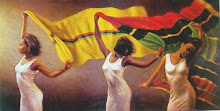
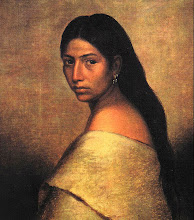
“Naked woman, black woman

Clothed with your colour which is life,
with your form which is beauty!

In your shadow I have grown up; the
gentleness of your hands was laid over my eyes.

And now, high up on the sun-baked
pass, at the heart of summer, at the heart of
noon,
I come upon you, my Promised Land,
And your beauty strikes me to the heart
like the flash of an eagle.

Naked woman, dark woman

Firm-fleshed ripe fruit, sombre raptures
of black wine, mouth making lyrical my mouth
Savannah stretching to clear horizons,
savannah shuddering beneath the East Wind's
eager caresses

Carved tom-tom, taut tom-tom, muttering
under the Conqueror's fingers

Your solemn contralto voice is the
spiritual song of the Beloved.

Naked woman, dark woman

Oil that no breath ruffles, calm oil on the
athlete's flanks, on the flanks of the Princes of Mali
Gazelle limbed in Paradise, pearls are stars on the
night of your skin

Delights of the mind, the glinting of red
gold against your watered skin

Under the shadow of your hair, my care
is lightened by the neighbouring suns of your eyes.

Naked woman, black woman,
I sing your beauty that passes, the form
that I fix in the Eternal,

Before jealous fate turn you to ashes to
feed the roots of life.”

Saturday, August 21, 2010

Let no one uproot the Pumpkin

Okot p’Bitek’s Song of Lawino is a poem concerning the rural Acholi woman Lawino’s tribulations as her husband, Ocol, has turned ‘western’ and looks down upon his roots. Lawino, the defender of her people’s virtues and values, laments her husband’s modern ways of living, but his degrading reply is to be found in the book from 1970, Song of Ocol, where he mocks her defence.

The excerpt below is taken from Song of Lawino:

The Democratic Party
How does it differ
From the Congress?

Ocol says
They want Uhuru,
His brother says
They want Uhuru and Peace,
Both of them say they fight ignorance and disease!

Then why do they not join hands,
Why do they split up the army
Into two hostile groups?
The spears of the young men
And their shields,
Why are the weapons
And the men and women
Dispersed so uselessly?

And while the pythons of sickness
Swallow the children
And the buffalos of poverty
Knock the people down
And ignorance stands there
Like an elephant,

The war leaders
Are tightly locked in bloody feuds,
Eating each other’s liver
As if the D.P. was leprosy
And the Congress yaws;

If only the parties
Would fight poverty
With the fury
With which they fight each other,
If diseases and ignorance
Were assaulted
With the deadly vengeance
With which Ocol assaults his mother’s son,
The enemies would have been
Greatly reduced by now.

Okot p'Bitek was born in 1932 in Gulu, Northern Uganda to Acholi parents. He began writing in his mother tongue Lwo, one of the Western Nilotic languages, subsequently his works White Teeth and Song of Lawino were translated into English.
p'Bitek passed away on July 20, 1982.

Monday, June 28, 2010

Tomorrow

Tomorrow by Frank Kobina Parkes from Songs from the Wilderness, 1965.

"If you forever fix your eyes on muddy river banks
To see the slime and rotten eggs that foul the air
You lose sight of the graceful brook
Which though not clear, is not so dark
As to absorb your image

If you will ever strain your eyes on bloated, croaking frogs
Beside the stream, and filthy ducks that swim the tide
You may not taste the flowing spring
Which though not white, is yet not black
And can reflect your shadow

If you forever look with jaundiced eye on struggling man
And see his faults and only those - his darker self
You will deride the God-like soul
Which sleeps beneath. Yearns. Waits just a while
A brief, brief while to flower."

Sunday, June 27, 2010

Redemption

Redemption by Frank Kobina Parkes from Songs from the Wilderness, 1965

"My world pines in your marble breasts, daughter of woe
Green buds crack in the dry harmattan wind
Sun beats down on the city of a million dead
Men wove hats with their hands for a shelter
And monkeys, from tree-tops bare, mock
With crown-capped glee
Bare-headed among the despoiled flowers I stand
Empty-handed, in built-up deserts
I groan mankind's loss
And search wide heavens for a sign not written there

I am a stranger....

My mother's house is desolate and bare
I, stranger upon earth, walk alone the misty pavements
Where bright sun shines and brings no warmth
As snowflakes parachute to rescue earth

Yet you are shivering, daughter of the land

I feel, can touch and yearn to chant old psalms
Recorded on soundtracks through Adam's mind
But I am no more human
Purged of mankind-knowing griefs
Snobbery passes me by
And I have lost my voice
In the whining of the arctic winds bleak and sharp
Despair withdraws from my cold paw in friendship shot
Alone I prowl, being without soul
Lone as a star that twinkles in a firmament of crushed-out eyes
Depths are frozen wombs
Barren skulls and cross-bones picked
And earth belongs to other races - pressed in steel

I am lost...and you...
And what shall we make
Of all these shining orbs and incandescent tombs?

The sun is dark, is cold the sun
I am a potter's vessel shaped by knowing hands
Fallen from sky of earth-dreams that never flower
The eye of the Lord is on me
(And his wrath too)
How long,
How long shall I riddle rock breasts for warmth
How long shall I, a worn Silesian exile, turn
Sore feet for refuge to shrines of past oppression?

Suffer me
Oh suffer me not to be separated
Firm breasts that milked my toothless gum

In the desert place
Let my cry come unto Thee!

I shall return
I shall return to sun-warmed lands
Where rivers flow all through the year
I shall return with the glory of sun-down
Only to battered citadels will I return
To bashed-in skulls and sun-picked bones
Wild groans of shattered hearthstones pierce my ears
Knock, O knock down the battlements of pride

Caress stone breasts with benumbed hands
That fire may rise
And coldness burn
And warmth return
And in red glow, behold:
That sign sure writ in blood

Shall these bones live?

The streams of Life gush out in tuneful song
Dead bones in rocky caves astir
Dead bones in mansions moving,
As the glory of God descends on earth

To be despoiled."

Saturday, June 26, 2010

After the Holocaust

The poem After the Holocaust by Frank Kobina Parkes from his collection of poems Songs from the Wilderness from 1965:

"Let us build new homesteads
New dreams to decorate these ruins
Let us weave fresh rafters from rescued stalks
Let us start all over again

The past is a pitiless dream
A dread nightmare, you may remember, which stared
Deep into our fearless eyes
We gave it a glance for glance
Frown for frown
Fouler word for filthy word
And when it kept on staring
Like a senseless imbecile
We lost our minds completely
We braced ourselves for self-assertion
To knock this beast over
And so redeem our peace

And that, you may remember,
Was the storm clouds breaking over us
And death marching in
And flowering fields laid low
And children in the womb with them

Now we look back to the pity of the nightmare
Not being anywhere near at all
And to sad awakening that our stare
Had been nowhere but into blank brotherly eyes
Seized by delirium like ourselves
And that, had the black storm only given us
A moment's chance,
And not struck just then....

But the past is horrific reality."

Thursday, June 24, 2010

Busi Mhlongo has joined the ancestors...

I just heard that Busi Mhlongo's time had come, and I try in vain to stop my tears. She had a voice which reached the deepest core of my soul.
The Queen of Maskanda, traditionally Zulu music played by men, fought a battle against cancer but succumbed at Inkosi Albert Luthuli Hospital, Durban, 15th June.

Jacob Zuma uttered these words in her remembrance: “She transformed the maskandi guitar of migrant Zulu mine workers into an instrument of peace.
Her music carried poignant messages of South Africa’s struggle for freedom and justice. She ensured her compositions defied categorisation and emphasised the universality of the human race.
Her love for music kept the flames of hope alive during our country’s struggle for democracy. Her music encouraged and influenced a range of contemporary South African artists.
She inspired the nation and let the world know of South Africa’s quest for freedom. A true legend has passed away.”


Saturday, February 6, 2010

The Andamanese Coming to A Halt?

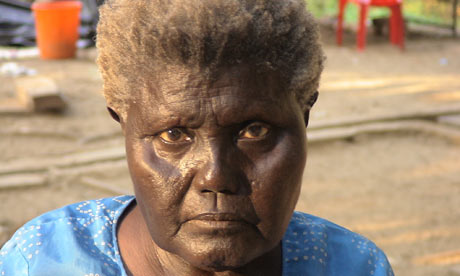
As the late Boa Sr, aged 85, died on 26 January 11.30pm, so did the Bo tongue, one of the ten Great Andamanese languages.
The people have lost a irreplaceable part of their culture, as the old songs only were remembered and sung by Chaachii, Boa Sr, which means an ancient element of self-understanding and history have disappeared forever.
This remarkable and lonely woman had been Bo's, or Aka-Bo, only speaker for 30-40 years after the death of her parents, so she had to learn an Andamanese version of Hindi just to communicate with people.

Just last year in November, a woman named Boro, passed away as the last speaker of the now extinct Khora language. This is a serious concern as two languages have died out in just three months.
The Andamanese languages have been divided into four groups: The Great Andamanese, which includes 'the northern' aforementioned Bo, Khora Jeru, and a fourth language now extinct, Cari (also northern language); the Jarawa; the Onge; and Sentinelese. The Great Andamanese speakers only number 52 in comparison to the pre-colonial presence of 5,000. The British either murdered most or they died of diseases carried by the British. They failed to 'pacify' these Great Andamanese, so many were captured and put in an Andamane home where none of the 150 children lived beyond the age of two.

The Andamanese people arrived at the Andaman Islands some 65,000 years ago maybe from India or a land bridge from Burma, and the languages thought to have originated in Africa may be 70,000 years old.

Even languages we consider constant and invariable, such as English, have come a long way the last 200-300 years. If we read it today it would seem very, very strange and maybe unrecognisable. Language changes from generation to generation. There is no stopping it even though some people may want to preserve it in the 'correct form' as it presently is or up until recently have been.
But normal changes in language is not what is endangering the Andamanese languages; disease, low population, alcohol abuse and dependency on food and shelter from the Indian government are, not to talk about when the colonizers stripped them of their lives, land and rights.
The perils are many, but I would hate to see yet another people become assimilated into urban dwellers, educated or not... People have the tendency to think there is but a few ways to live right and 'save' and 'salvage' others by giving them what they themselves have. The basics are of course desired by everyone, but dependency on a bigger government to provide the necessaries to the ones small in number have its disadvantages. Without media attention, NGOs and the people's own voice they will be lost in bureau-crazy.

I don't know of any projects done to specifically help the indigenous Andamanese people. If anyone knows, you are most welcome to leave a comment and I will post it on the blog.
I know Survival International helps the Jarawa people among other 'tribal people' all over the world. You might want to check out their website to see what problems the Jarawa face and what SI does to help.

With the awareness of being one, comes the awareness of being different


Related Posts Plugin for WordPress, Blogger...