Showing posts with label poetry. Show all posts

Thursday, June 28, 2012

“Sympathy”, “We Wear the Mask” & “Harriet Beecher Stowe” by Paul Laurence Dunbar


 A few more poems by Paul Laurence Dunbar.

 "Sympathy"

I know what the caged bird feels, alas!
        When the sun is bright on the upland slopes;
    When the wind stirs soft through the springing grass,
    And the river flows like a stream of glass;
        When the first bird sings and the first bud opes,
    And the faint perfume from its chalice steals —
    I know what the caged bird feels!
    I know why the caged bird beats his wing
        Till its blood is red on the cruel bars;
    For he must fly back to his perch and cling
    When he fain would be on the bough a-swing;
        And a pain still throbs in the old, old scars
    And they pulse again with a keener sting —
    I know why he beats his wing!
    I know why the caged bird sings, ah me,
        When his wing is bruised and his bosom sore,—
    When he beats his bars and he would be free;
    It is not a carol of joy or glee,
        But a prayer that he sends from his heart's deep core,
    But a plea, that upward to Heaven he flings —
    I know why the caged bird sings!

"We Wear the Mask"

We wear the mask that grins and lies,
    It hides our cheeks and shades our eyes,—
    This debt we pay to human guile;
    With torn and bleeding hearts we smile,
    And mouth with myriad subtleties.
    Why should the world be over-wise,
    In counting all our tears and sighs?
    Nay, let them only see us, while
            We wear the mask.
    We smile, but, O great Christ, our cries
    To thee from tortured souls arise.
    We sing, but oh the clay is vile
    Beneath our feet, and long the mile;
    But let the world dream otherwise,
            We wear the mask! 

“Harriet Beecher Stowe”

She told the story, and the whole world wept
At wrongs and cruelties it had not known
But for this fearless woman’s voice alone.
She spoke to consciences that long had slept:
Her message, Freedom’s clear reveille, swept
From heedless hovel to complacent throne.
Command and prophecy were in the tone,
And from its sheath the sword of justice leapt.
Around two peoples swelled a fiery wave,
But both came forth transfigured from the flame.
Blest be the hand that dared be strong to save,
And blest be she who in our weakness came—
Prophet and priestess! At one stroke she gave
A race to freedom and herself to fame.


Tuesday, June 26, 2012

“Ere Sleep Comes Down to Soothe the Weary Eyes” by Paul Laurence Dunbar


Born in Dayton, Ohio, 1872, Paul Laurence Dunbar’s first collection of poems Oak and Ivy was published in 1893. Because of the favourable review by William Dean Howells of Dunbar’s second book Majors and Minors (1896), Dunbar’s success was assured from that time on and he became a national literary figure. Other works soon followed, even after he was diagnosed with tuberculosis in 1900: Lyrics of Lowly Life (1896), Folks from Dixie (1898), Lyrics of the Hearthside (1899), The Strength of Gideon (1900), Lyrics of Love and Laughter (1903), In Old Plantation Days (1903), The Heart of Happy Hollow (1904) and Lyrics of Sunshine and Shadow (1905). He passed away in 1906.


Ere sleep comes down to soothe the weary eyes,
  Which all the day with ceaseless care have sought
The magic gold which from the seeker flies;
  Ere dreams put on the gown and cap of thought,
And make the waking world a world of lies,—
  Of lies most palpable, uncouth, forlorn,
That say life’s full of aches and tears and sighs,—
  Oh, how with more than dreams the soul is torn,
Ere sleep comes down to soothe the weary eyes.

Ere sleep comes down to soothe the weary eyes,
  How all the griefs and heart-aches we have known
Come up like pois’nous vapors that arise
  From some base witch’s caldron, when the crone,
To work some potent spell, her magic plies.
  The past which held its share of bitter pain,
Whose ghost we prayed that Time might exorcise,
  Comes up, is lived and suffered o’er again,
Ere sleep comes down to soothe the weary eyes.

Ere sleep comes down to soothe the weary eyes,
  What phantoms fill the dimly lighted room;
What ghostly shades in awe-creating guise
  Are bodied forth within the teeming gloom.
What echoes faint of sad and soul-sick cries,
  And pangs of vague inexplicable pain
That pay the spirit’s ceaseless enterprise,
  Come thronging through the chambers of the brain,
Ere sleep comes down to soothe the weary eyes.

Ere sleep comes down to soothe the weary eyes,
  Where ranges forth the spirit far and free?
Through what strange realms and unfamiliar skies
  Tends her far course to lands of mystery?
To lands unspeakable—beyond surmise,
  Where shapes unknowable to being spring,
Till, faint of wing, the Fancy fails and dies
  Much wearied with the spirit’s journeying,
Ere sleep comes down to soothe the weary eyes.

Ere sleep comes down to soothe the weary eyes,
  How questioneth the soul that other soul,—
The inner sense which neither cheats nor lies,
  But self exposes unto self, a scroll
Full writ with all life’s acts unwise or wise,
  In characters indelible and known;
So, trembling with the shock of sad surprise,
  The soul doth view its awful self alone,
Ere sleep comes down to soothe the weary eyes.

When sleep comes down to seal the weary eyes,
  The last dear sleep whose soft embrace is balm,
And whom sad sorrow teaches us to prize
  For kissing all our passions into calm,
Ah, then, no more we heed the sad world’s cries,
  Or seek to probe th’ eternal mystery,
Or fret our souls at long-withheld replies,
  At glooms through which our visions cannot see,
When sleep comes down to seal the weary eyes.

Wednesday, February 1, 2012

Excerpt from 'Twasinta’s Seminoles / Rape of Florida'


Albery A. Whitman was born in 1851, Hart County, Kentucky, and lived an existence in slavery until 1863. Already an orphan by 12, he accomplished to be a well known minister of the AME church (African Methodist Episcopal Church) and a schoolteacher by the age of 25. He is known for his epic-length poem “Not a man and yet a Man” published in 1877, though his best known work is The Rape of Florida, published 1884, and reprinted the following year Twasinta’s Seminoles. In 1890 both poems were again reprinted along with some short poems. In 1893 he composed and read “The Freedman’s Triumphant Song” at the Chicago World’s Fair. The Octoroon, An Idyl of the South, his last publication, came out in 1901, the year he passed away. He fought a hard struggle with alcohol and pneumonia but he was a light in this world with his wonderful words.


The following excerpt is from Twasinta’s Seminoles / Rape of Florida.

Canto 1

I
The negro slave by Swanee River sang;
Well-pleased he listened to his echoes ringing;
For in his heart a secret comfort sprang,
When Nature seemed to join his mournful singing.
To mem’ry’s cherished objects fondly clinging;
His bosom felt the sunset’s patient glow,
And spirit whispers into weird life springing,
Allured to worlds he trusted yet to know,
And lightened for awhile life’s burdens here below.

II
The drowsy dawn from many a low-built shed,
Beheld his kindred driven to their task;
Late evening saw them turn with weary tread
And painful faces back; and dost thou ask
How sang these bondmen? how their suff’rings mask?
Song is the soul of sympathy divine,
And hath an inner ray where hope may bask;
Song turns the poorest waters into wine,
Illumines exile hearts and makes their faces shine.

III
The negro slave by Swanee river sang,
There soon the human hunter rode along;
And eagerly behind him came a gang
Of hounds and men, – the bondmen hushed his song –
Around him came a silent, list’ning throng;
“Some runaway!” he muttered; said no more,
But sank from view the growing corn among;
And though deep pangs his wounded spirit bore,
He hushed his soul, and went on singing as before.

IV
So fared the land where slaves were groaning yet –
Where beauty’s eyes must feed the lusts of men!
‘Tis as when horrid dreams we half forget,
Would then relate, and still relate again –
Ah! cold abhorrence hesitates my pen!
The heavens were sad, and hearts of men were faint;
Philanthropy implored and wept, but then
The wrong, unblushing trampled on Restraint,
While feeble Law sat by and uttered no complaint.

V
“Fly and be free!” a whisper comes from heaven,
“Thy cries are heard!” the bondman’s up and gone!
To grasp the dearest boon to mortals given,
He frantic flies, unaided and alone.
To him the red man’s dwellings are unknown;
But he can crave the freedom of his race,
Can find his harvests in the desert sown,
And in the cypress forest’s dark embrace
A pathway to his lonely habitations trace.

VI
The sable slave, from Georgia’s utmost bounds,
Escapes for life into the Great Wahoo.
Here he has left afar the savage hounds
And human hunters that did late pursue;
There in the hommock darkly hid from view,
His wretched limbs are stretched awhile to rest,
Till some kind Seminole shall guide him thro’
To where by hound nor hunter more distrest,
He in a flow’ry home, shall be the red man’s guest.

VII
If tilled profusion does not crown the view,
Nor wide-ranged farms begirt with fences spread;
The cultivated plot is well to do;
And where no slave his groaning life has led,
The songs of plenty fill the lowliest shed.
Who could wish more, when Nature, always green,
Brings forth fruit-bearing woods and fields of bread?
Wish more, where cheerful valleys bloom between,
And herds browse on the hills, where winter ne’er has been?

[…]

X
Fair Florida! whose scenes could so enhance –
Could in the sweetness of the earth excel!
Wast thou the Seminole’s inheritance?
Yea, it was thee he loved, and loved so well!
‘Twas ‘neath thy palms and pines he strove to dwell.
Not savage, but resentful to the knife,
For these he sternly struggled – sternly fell!
Thoughtful and brave, in a long uneven strife,
He held the verge of manhood mid the heights of life.

XI
A wild-born pride endeared him to thy soil!
When roamed his herds without a keeper’s care –
Where man knew not the pangs of slavish toil!
And where thou didst not blooming pleasures spare,
But well allotted each an ample share,
He loved to dwell: Oh! isn’t the goal of life
Where man has plenty and to man is fair?
When free from avarice’s pinch and strife,
Is earth not like the Eden-home of man and wife?

[…]

XIX
Oh! sing it in the light of freedom’s morn,
Tho’ tyrant wars have made the earth a grave;
The good, the great, and true, are, if so, born,
And so with slaves, chains do not make the slave!
If high-souled birth be what the mother gave, –
If manly birth, and manly to the core, –
Whate’er the test, the man will he behave!
Crush him to earth and crush him o’er and o’er,
A man he’ll rise at last and meet you as before.

XX
So with our young Atlassa*, hero-born, –
Free as the air within his palmy shade,
The nobler traits that do the man adorn,
In him were native: Not the music made
In Tampa’s forests or the everglade
Was fitter than in this young Seminole
Was the proud spirit which did life pervade,
And glow and tremble in his ardent soul –
Which, lit his inmost-self, and spurned all mean control.

XXI
Than him none followed chase with nimbler feet,
None readier in the forest council rose;
To speak for war, e’er sober and discreet,
In battle stern, but kind to fallen foes;
He led the charge, but halted, – slow to close
The vexed retreat: In front of battle he,
Handsome and wild his proud form would expose;
But in the cheering van of victory,
Gentle and brave he was the real chief to see.

XXII
Lo! mid a thousand warriors where he stands,
Pride of all hearts and idol of his race!
Look how the chieftains of his war-tried bands
Kindle their courage in his valiant face!
And as his lips in council open, trace
How deep suspense her earnest furrows makes
On ev’ry brow! How rings the forest-place
With sounding cheers! when native valor wakes
His dark intrepid eyes, and he their standard takes!

XXIII
Proud spirit of the hommock-bounded home
Well wast thy valor like a buckler worn!
And when the light of the other times shall come, –
When history’s muse shall venture to adorn
The brow of all her children hero-born, –
When the bold truth to man alike assigns
The place he merits, of no honor shorn;
The wreath shall be, that thy proud brow entwines,
As green as Mickasukie’s** everlasting pines!

XXIV
Well bled thy warriors at their leader’s side!
Well stood they the oppressor’s wasting fire;
For years sweep on, and in their noiseless tide,
Bear down the mem’ries of the past! The dire
And gloomful works of tyrants shall exire,
Till naught survives, save truth’s great victories;
Then shall the voyager on his way aspire
To ponder what vast wrecks of time he sees,
And on Fame’s temple columns read their memories!

XXV
Not so with Osceola***, thy dark mate;
The hidden terror of the hommock, he
Sat gloomily and nursed a bitter hate, –
The white man was his common enemy –
He rubbed the burning wounds of injury,
And plotted in his dreadful silent gloom;
As dangerous as a rock within the sea.
And when in fray he showed his fearless plume,
Revenge made sweet the blows that dealt the white man’s doom.

XXVI
The pent-up wrath that rankled in his breast,
O’er smould’ring embers shot a lurid glare,
And wrongs that time itself had not redrest,
In ghost-like silence stalked and glimmered there.
And from the wizard caverns of despair,
Came voice and groan, reminding o’er and o’er
The outrage on his wife so young and fair;
And so, by heaven and earth and hell he swore
To treat in council with the white man never more.

XXVII
Such were the chiefs who led their daring braves
In many a battle nobly lost or won,
And consecrated Mickasukie’s graves
To that sweet province of the summer sun!
And still shall history forgetful run?
Shall legend too be mute? then Poesy,
Divinest chronicler of deeds well done,
From the blest shrine and annals of the free,
Sing forth thy praise and man shall hear attentively.

XXVIII
The poorest negro coming to their shore,
To them was brother – their own flesh and blood, –
They sought his wretched manhood to restore, –
They found his hidings in the swampy wood,
And brought him forth – in arms before him stood, –
The citizens of God and Sovran earth, –
They shot straight forward looks with flame imbued,
Till in him manhood sprang, a noble birth,
And warrior-armed he rose to all that manhood’s worth.

XXIX
On the dark front of battle often seen,
Or holding dang’rous posts through dreadful hours, –
In ranks obedient, in command serene,
His comrades learn to note the tested powers
Which prove that valor is not always ours,
Be whomsoever we: A common race
Soon from this union flows – soon rarest flowers
Bloom out and smile in beauty’s blending grace,
And rivals they become for love’s sublimest place.

XXX
The native warrior leads his ebon maid,
The dark young brave his bloom-hued lover wins;
And where soft spruce and willows mingle shade,
Young life mid sunniest hours its course begins:
All Nature pours its never-ending dins
In groves of rare-hued leaf without’n end, –
‘Tis as if Time, forgetting Eden’s sins,
Relents, and spirit visitors descend
In love’s remembered tokens, earth once more to blend.

XXXI
The sleepy mosses wave within the sun,
And on the dark elms climbs the mistletoe;
Great tangled vines through pendant branches run,
And hang their purple clusters far below;
The old pines wave their summits to and fro,
And dancing to the earth, impatient light
Touches the languid scene, to quickly go,
Like some gay spirit in its sunny plight,
That, visiting the earth, did glance and take its flight…


* “Atlassa” refers to Wild Cat, also called Coacoochee, who was a leading Seminole chief during the 2nd Seminole War
** Miccosukee – name of a Native American tribe and an area in Florida
*** Osceola was an influential leader and war leader among the Seminoles

Friday, January 20, 2012

"Bury Me In a Free Land" by Frances Harper


Make me a grave where’er you will,
In a lowly plain, or a lofty hill;
Naje ut anibg earth’s humblest graves,
But not in a land where men are slaves.

I could not rest if around my grave
I heard the steps of a trembling slave;
His shadow above my silent tomb
Would make it a place of fearful gloom.

I could not rest I heard the tread
Of a coffle gang to the shambles led,
And the mother’s shriek of wild despair
Rise like a curse on the trembling air.

I could not sleep if I saw the lash
Drinking her blood at each fearful gash,
And I saw her babes torn from her breast,
Like trembling doves from their parent nest.

I’d shudder and start if I heard the bay
Of bloodhounds seizing their human prey,
And I heard the captive plead in vain
As they bound afresh his galling chain.

If I saw young girls from their mothers’ arms
Bartered and sold for their youthful charms,
My eye would flash with a mournful flame,
My death-paled cheek grow red with shame.

I would sleep, dear friends, where bloated might
Can rob no man of his dearest right;
My rest shall be calm in any grave
Where none can call his brother a slave.

I ask no monument, proud and high,
To arrest the gaze of the passers-by;
All that my yearning spirit craves,
Is bury me not in a land of slaves.


Thursday, January 19, 2012

"The Slave Auction" by Frances Harper


The sale began – young girls were there,
Defenceless in their wretchedness,
Whose stifled sobs of deep despair
Revealed their anguish and distress.

And mothers stood with streaming eyes,
And saw their dearest children sold;
Unheeded rose their bitter cries,
While tyrants bartered them for gold.

And woman, with her love and truth –
For these in sable forms may dwell –
Gaz’d on the husband of her youth,
With anguish none may paint or tell.

And men, whose sole crime was their hue,
The impress of their Maker’s hand,
And frail and shrinking children, too,
Were gathered in that mournful band.

Ye who have laid your love to rest,
And wept above their lifeless clay,
Know not the anguish of that breast,
Whose lov’d are rudely torn away.

Ye may not know how desolate
Are bosoms rudely forced to part,
And how a dull and heavy weight
Will press the life-drops from the heart.

Tuesday, January 3, 2012

”Eliza Harris” by Frances Harper


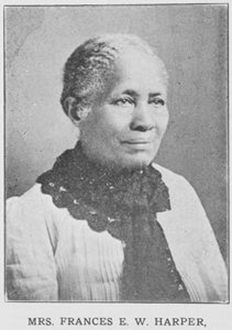
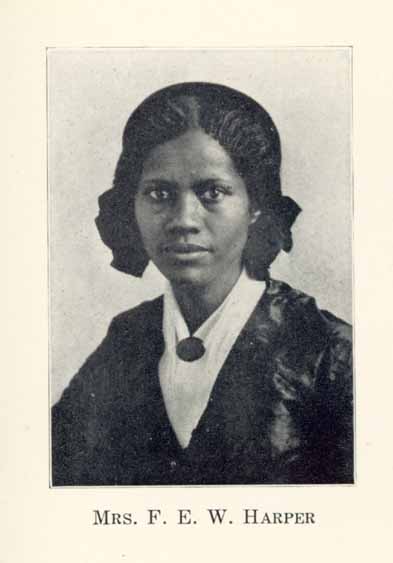
Frances Ellen Watkins Harper, 1825-1911, was a dear poet and lecturer of the Anti-Slavery Society connected to the Abolitionist movement, the Underground Railroad, the Women’s Christian Temperance Union, and the A. M. E. Church. Her first volume, Poems on Various Subjects, was published in 1854, and later followed by Moses: A Story of the Nile (1869), Poems (1871) and Sketches of Southern Life (1872). Here you have the poem “Eliza Harris”:

Like a fawn from the arrow, startled and wild,
A woman swept by us, bearing a child;
In her eye was the night of a settled despair,
And her brow was o’ershaded with anguish and care.

She was nearing the river – in reaching the brink,
She heeded no danger, she paused not to think;
For she is a mother – her child is a slave –
And she’ll give him his freedom, or find him a grave!

It was a vision to haunt us, that innocent face –
So pale in its aspect, so fair in its grace;
As the tramp of the horse and the bay of the hound,
With the fetters that gall, were trailing the ground!

She was nerv’d by despair, and strengthened by woe,
As she leap’d o’er the chasms that yawn’d from below;
Death howl’d in the tempest, and rav’d in the blast,
But she heard not the sound till the danger was past.

Oh! how shall I speak of my proud country’s shame?
Of the stains on her glory, how give them their name?
How say that her banner in mockery waves –
Her “star spangled banner” – o’er millions of slaves?

How say that the lawless may torture and chase
A woman whose crime is the hue of her face?
How the depths of the forest may echo around,
With the shrieks of despair, and the bay of the hound?

With her step on the ice, and her arm on her child,
The danger was fearful, the pathway was wild;
But, aided by Heaven, she gained a free shore,
Where the friends of humanity open’d their door.

So fragile and lovely, so fearfully pale,
Like a lily that bends to the breath of the gale,
Save the heave of her breast, and the sway of her hair,
You’d have thought her a statue of fear and despair.

In agony close to her bossom she press’d
The life of her heart, the child of her breast: –
Oh! love from its tenderness gathering might,
Had strengthen’d her soul for the dangers of flight.

But she’s free! – yes, free from the land where the slave
From the hand of oppression must rest in the grave;
Where bondage and torture, where scourges and chains
Have plac’d on our banner indelible stains.

The bloodhounds have miss’d the scent of her way;
The hunter is rifled and foil’d of his prey;
Fierce jargon and cursing, with clanking of chains,
Make sounds of strange discord on Liberty’s plains.

With the rapture of love and fullness of bliss,
She placed on his brow a mother’s fond kiss: –
O poverty, danger and death she can brave,
For the child of her love is no longer a slave!


Saturday, July 2, 2011

George Moses Horton, Myself

George Moses Horton, Myself


I feel myself in need

Of the inspiring strains of ancient lore

My heart to lift, my empty mind to feed,

And all the world explore.


I know that I am old

And never can recover what is past,

But for the future may some light unfold

And soar from ages blast.


I feel resolved to try,

My wish to prove, my calling to pursue,

Or mount up from the earth into the sky,

To show what Heaven can do.


My genius from a boy,

Has fluttered like a bird within my heart;

But could not thus confined her powers employ,

Impatient to depart.


She like a restless bird,

Would spread her wings, her power to be unfurl’d,

And let her songs be loudly heard,

And dart from world to world.

Saturday, March 26, 2011

Black Woman

One of the poets I really like and admire is Léopold Sédar Senghor. His words look as if they dance across the paper, and it appears that I never stop to be amazed of his language of arts and truth. Needless to say, he was not only a poet but one of the greatest African intellectuals of the 20th century as he in 1960 became the first President of Republic Senegal and in the 1930s he was one of les trois pères, the three fathers, of the movement la Négritude along with Aimé Césaire (Martinique) and León Damas (French Guiana). In the 1920s and 30s movements and literary styles such as the Harlem Rennaissance swept over the African Diaspora and black students and scholars took up the yearning for Black solidarity against colonial racism which resulted in the controversial Négritude movement. Wole Soyinka, the Nigerian poet and novelist, opposed la Nègritude saying “Un tigre ne proclame pas sa tigritude, il saute sur sa proie” (“A tiger does not proclaim its tigerness; it jumps on its prey”). Nevertheless, la Nègritude is a marking point in Black history and a number of passionate writers have contributed to the movement, including Paul Niger and Guy Tirolien (Guadeloupe), Gilbert Gratiant and Edouard Glissant (Martinique), Jacques Roumain, Jean Brière, Félix Morisseau-Leroy and René Depestre (Haiti), Birago Diop and David Diop (Senegal), and Bernard Dadié (Côte d’Ivoire)

It annoys me so much that I have yet to learn French so I can read the great literature of the French Antilles and other French speaking areas because there is so so much Black history and literature in French. I am certain that his poems are even more beautiful in the original language. Until then I will post his poems in English for the masses, including myself.


“Naked woman, black woman

Clothed with your colour which is life,
with your form which is beauty!

In your shadow I have grown up; the
gentleness of your hands was laid over my eyes.

And now, high up on the sun-baked
pass, at the heart of summer, at the heart of
noon,
I come upon you, my Promised Land,
And your beauty strikes me to the heart
like the flash of an eagle.

Naked woman, dark woman

Firm-fleshed ripe fruit, sombre raptures
of black wine, mouth making lyrical my mouth
Savannah stretching to clear horizons,
savannah shuddering beneath the East Wind's
eager caresses

Carved tom-tom, taut tom-tom, muttering
under the Conqueror's fingers

Your solemn contralto voice is the
spiritual song of the Beloved.

Naked woman, dark woman

Oil that no breath ruffles, calm oil on the
athlete's flanks, on the flanks of the Princes of Mali
Gazelle limbed in Paradise, pearls are stars on the
night of your skin

Delights of the mind, the glinting of red
gold against your watered skin

Under the shadow of your hair, my care
is lightened by the neighbouring suns of your eyes.

Naked woman, black woman,
I sing your beauty that passes, the form
that I fix in the Eternal,

Before jealous fate turn you to ashes to
feed the roots of life.”

Saturday, August 21, 2010

Let no one uproot the Pumpkin

Okot p’Bitek’s Song of Lawino is a poem concerning the rural Acholi woman Lawino’s tribulations as her husband, Ocol, has turned ‘western’ and looks down upon his roots. Lawino, the defender of her people’s virtues and values, laments her husband’s modern ways of living, but his degrading reply is to be found in the book from 1970, Song of Ocol, where he mocks her defence.

The excerpt below is taken from Song of Lawino:

The Democratic Party
How does it differ
From the Congress?

Ocol says
They want Uhuru,
His brother says
They want Uhuru and Peace,
Both of them say they fight ignorance and disease!

Then why do they not join hands,
Why do they split up the army
Into two hostile groups?
The spears of the young men
And their shields,
Why are the weapons
And the men and women
Dispersed so uselessly?

And while the pythons of sickness
Swallow the children
And the buffalos of poverty
Knock the people down
And ignorance stands there
Like an elephant,

The war leaders
Are tightly locked in bloody feuds,
Eating each other’s liver
As if the D.P. was leprosy
And the Congress yaws;

If only the parties
Would fight poverty
With the fury
With which they fight each other,
If diseases and ignorance
Were assaulted
With the deadly vengeance
With which Ocol assaults his mother’s son,
The enemies would have been
Greatly reduced by now.

Okot p'Bitek was born in 1932 in Gulu, Northern Uganda to Acholi parents. He began writing in his mother tongue Lwo, one of the Western Nilotic languages, subsequently his works White Teeth and Song of Lawino were translated into English.
p'Bitek passed away on July 20, 1982.

Monday, June 28, 2010

Tomorrow

Tomorrow by Frank Kobina Parkes from Songs from the Wilderness, 1965.

"If you forever fix your eyes on muddy river banks
To see the slime and rotten eggs that foul the air
You lose sight of the graceful brook
Which though not clear, is not so dark
As to absorb your image

If you will ever strain your eyes on bloated, croaking frogs
Beside the stream, and filthy ducks that swim the tide
You may not taste the flowing spring
Which though not white, is yet not black
And can reflect your shadow

If you forever look with jaundiced eye on struggling man
And see his faults and only those - his darker self
You will deride the God-like soul
Which sleeps beneath. Yearns. Waits just a while
A brief, brief while to flower."

Sunday, June 27, 2010

Redemption

Redemption by Frank Kobina Parkes from Songs from the Wilderness, 1965

"My world pines in your marble breasts, daughter of woe
Green buds crack in the dry harmattan wind
Sun beats down on the city of a million dead
Men wove hats with their hands for a shelter
And monkeys, from tree-tops bare, mock
With crown-capped glee
Bare-headed among the despoiled flowers I stand
Empty-handed, in built-up deserts
I groan mankind's loss
And search wide heavens for a sign not written there

I am a stranger....

My mother's house is desolate and bare
I, stranger upon earth, walk alone the misty pavements
Where bright sun shines and brings no warmth
As snowflakes parachute to rescue earth

Yet you are shivering, daughter of the land

I feel, can touch and yearn to chant old psalms
Recorded on soundtracks through Adam's mind
But I am no more human
Purged of mankind-knowing griefs
Snobbery passes me by
And I have lost my voice
In the whining of the arctic winds bleak and sharp
Despair withdraws from my cold paw in friendship shot
Alone I prowl, being without soul
Lone as a star that twinkles in a firmament of crushed-out eyes
Depths are frozen wombs
Barren skulls and cross-bones picked
And earth belongs to other races - pressed in steel

I am lost...and you...
And what shall we make
Of all these shining orbs and incandescent tombs?

The sun is dark, is cold the sun
I am a potter's vessel shaped by knowing hands
Fallen from sky of earth-dreams that never flower
The eye of the Lord is on me
(And his wrath too)
How long,
How long shall I riddle rock breasts for warmth
How long shall I, a worn Silesian exile, turn
Sore feet for refuge to shrines of past oppression?

Suffer me
Oh suffer me not to be separated
Firm breasts that milked my toothless gum

In the desert place
Let my cry come unto Thee!

I shall return
I shall return to sun-warmed lands
Where rivers flow all through the year
I shall return with the glory of sun-down
Only to battered citadels will I return
To bashed-in skulls and sun-picked bones
Wild groans of shattered hearthstones pierce my ears
Knock, O knock down the battlements of pride

Caress stone breasts with benumbed hands
That fire may rise
And coldness burn
And warmth return
And in red glow, behold:
That sign sure writ in blood

Shall these bones live?

The streams of Life gush out in tuneful song
Dead bones in rocky caves astir
Dead bones in mansions moving,
As the glory of God descends on earth

To be despoiled."

Saturday, June 26, 2010

After the Holocaust

The poem After the Holocaust by Frank Kobina Parkes from his collection of poems Songs from the Wilderness from 1965:

"Let us build new homesteads
New dreams to decorate these ruins
Let us weave fresh rafters from rescued stalks
Let us start all over again

The past is a pitiless dream
A dread nightmare, you may remember, which stared
Deep into our fearless eyes
We gave it a glance for glance
Frown for frown
Fouler word for filthy word
And when it kept on staring
Like a senseless imbecile
We lost our minds completely
We braced ourselves for self-assertion
To knock this beast over
And so redeem our peace

And that, you may remember,
Was the storm clouds breaking over us
And death marching in
And flowering fields laid low
And children in the womb with them

Now we look back to the pity of the nightmare
Not being anywhere near at all
And to sad awakening that our stare
Had been nowhere but into blank brotherly eyes
Seized by delirium like ourselves
And that, had the black storm only given us
A moment's chance,
And not struck just then....

But the past is horrific reality."

Saturday, January 31, 2009

Two poems by George Moses Horton; "On Liberty and Slavery" and "To Eliza"

George Moses Horton was born in Northampton County, North Carolina, approx. 1797 (d. 1883), as a slave of the Horton family. He learned to read and write while being hired out by his master to the president of Chapel Hill and he was a campus character there. He wrote love poems for the students at 25 or 50 cents a piece according to the degree of ardor desired. Then fugitive poems by him crept into print and in 1829 his first volume titled The Hope of Liberty was published in Raleigh, which made him the first southern black to be an author. The same piece of work was later republished in Philadelphia in 1837 as Poems by a Slave but he did not earn enough to buy his freedom. However, he escaped to the North when the Northern troops occupied Raleigh in 1865, and he became a free man, and during that same year he published another work called Naked Genius.

Here is "On Liberty and Slavery":

"Alas! and am I born for this,
To wear this slavish chain?
Deprived of all created bliss,
Through hardship, toil and pain!

How long have I in bondage lain,
And languished to be free!
Alas! and must I still complain -
Deprived of liberty.

Oh, Heaven! and is there no relief
This side the silent grave -
To soothe the pain - to quell the grief
And anguish of a slave?

Come Liberty, thou cheerful sound,
Roll through my ravished ears!
Come, let my grief in joys be drowned,
And drive away my fears.

Say unto foul oppression, Cease:
Ye tyrants rage no more,
And let the joyful trump of peace,
Now bid the vassal soar.

Soar on the pinions of that dove
Which long has cooed for thee,
And breathed her notes from Afric's grove,
The sound of Liberty.

Oh, Liberty! thou golden prize,
So often sought by blood -
We crave thy sacred sun to rise,
The gift of nature's God!

Bid slavery hide her haggard face,
And barbarism fly:
I scorn to see the sad disgrace
In which enslaved I lie.

Dear Liberty! upon thy breast,
I languish to respire;
And like the swan unto her nest,
I'd to thy smiles retire.

Oh, blest asylum - heavenly balm!
Unto thy boughs I flee -
And in thy shades the storm shall calm,
With songs of Liberty!"


"To Eliza":

"Eliza, tell thy lover why
Or what induced thee to deceive me?
Fare thee well - away I fly -
I shun the lass who thus will grieve me.

Eliza, still thou art my song,
Although by force I may foresake thee;
Fare thee well, for I was wrong
To woo thee while another take thee.

Eliza, pause and think awhile -
Sweet lass! I shall forget thee never:
Fare thee well! although I smile,
I grieve to give thee up for ever.

Eliza, I shall think of thee -
My heart shall ever twine about thee;
Fare thee well - but think of me,
Compell'd to live and die without thee.
"Fare the well! - and if for ever,
Still for ever fare thee well!*""

* Last two lines is from "Fare thee well" by George Gordon Byron.

Sunday, January 25, 2009

"The Black Mother"

The Black Mother written by Marcus Garvey.

Where can I find love that never changes
Smiles that are true and always just the same,
Caring not how the fierce tempest rages,
Willing ever to shield my honored name?

This I find at home, only with Mother,
Who cares for me with patient tenderness;
She from every human pain would rather

Save me, and drink the dregs of bitterness.

If on life's way I happen to flounder,
My true thoughts should be of Mother dear,
She is the rock that ne'er rifts asunder,
The cry of her child, be it far or near.

This is love wonderful beyond compare;
It is God's choicest gift to mortal man;
You, who know Mother, in this thought must share,

For, she, of all, is Angel of your Clan.

My Mother is black, loveliest of all;
Yes, she is as pure as the new made morn;
Her song of glee is a clear rhythmic call
To these arms of love to which I was born.

I shall never forget you, sweet Mother,
Where'er in life I may happen to roam;

Thou shalt always be the Fairy Charmer
To turn my dearest thoughts to things at home.


Related Posts Plugin for WordPress, Blogger...