Thursday, June 28, 2012

“Sympathy”, “We Wear the Mask” & “Harriet Beecher Stowe” by Paul Laurence Dunbar


 A few more poems by Paul Laurence Dunbar.

 "Sympathy"

I know what the caged bird feels, alas!
        When the sun is bright on the upland slopes;
    When the wind stirs soft through the springing grass,
    And the river flows like a stream of glass;
        When the first bird sings and the first bud opes,
    And the faint perfume from its chalice steals —
    I know what the caged bird feels!
    I know why the caged bird beats his wing
        Till its blood is red on the cruel bars;
    For he must fly back to his perch and cling
    When he fain would be on the bough a-swing;
        And a pain still throbs in the old, old scars
    And they pulse again with a keener sting —
    I know why he beats his wing!
    I know why the caged bird sings, ah me,
        When his wing is bruised and his bosom sore,—
    When he beats his bars and he would be free;
    It is not a carol of joy or glee,
        But a prayer that he sends from his heart's deep core,
    But a plea, that upward to Heaven he flings —
    I know why the caged bird sings!

"We Wear the Mask"

We wear the mask that grins and lies,
    It hides our cheeks and shades our eyes,—
    This debt we pay to human guile;
    With torn and bleeding hearts we smile,
    And mouth with myriad subtleties.
    Why should the world be over-wise,
    In counting all our tears and sighs?
    Nay, let them only see us, while
            We wear the mask.
    We smile, but, O great Christ, our cries
    To thee from tortured souls arise.
    We sing, but oh the clay is vile
    Beneath our feet, and long the mile;
    But let the world dream otherwise,
            We wear the mask! 

“Harriet Beecher Stowe”

She told the story, and the whole world wept
At wrongs and cruelties it had not known
But for this fearless woman’s voice alone.
She spoke to consciences that long had slept:
Her message, Freedom’s clear reveille, swept
From heedless hovel to complacent throne.
Command and prophecy were in the tone,
And from its sheath the sword of justice leapt.
Around two peoples swelled a fiery wave,
But both came forth transfigured from the flame.
Blest be the hand that dared be strong to save,
And blest be she who in our weakness came—
Prophet and priestess! At one stroke she gave
A race to freedom and herself to fame.


Tuesday, June 26, 2012

“Ere Sleep Comes Down to Soothe the Weary Eyes” by Paul Laurence Dunbar


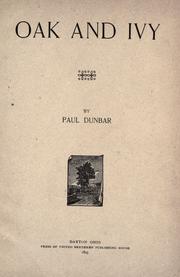
Born in Dayton, Ohio, 1872, Paul Laurence Dunbar’s first collection of poems Oak and Ivy was published in 1893. Because of the favourable review by William Dean Howells of Dunbar’s second book Majors and Minors (1896), Dunbar’s success was assured from that time on and he became a national literary figure. Other works soon followed, even after he was diagnosed with tuberculosis in 1900: Lyrics of Lowly Life (1896), Folks from Dixie (1898), Lyrics of the Hearthside (1899), The Strength of Gideon (1900), Lyrics of Love and Laughter (1903), In Old Plantation Days (1903), The Heart of Happy Hollow (1904) and Lyrics of Sunshine and Shadow (1905). He passed away in 1906.


Ere sleep comes down to soothe the weary eyes,
  Which all the day with ceaseless care have sought
The magic gold which from the seeker flies;
  Ere dreams put on the gown and cap of thought,
And make the waking world a world of lies,—
  Of lies most palpable, uncouth, forlorn,
That say life’s full of aches and tears and sighs,—
  Oh, how with more than dreams the soul is torn,
Ere sleep comes down to soothe the weary eyes.

Ere sleep comes down to soothe the weary eyes,
  How all the griefs and heart-aches we have known
Come up like pois’nous vapors that arise
  From some base witch’s caldron, when the crone,
To work some potent spell, her magic plies.
  The past which held its share of bitter pain,
Whose ghost we prayed that Time might exorcise,
  Comes up, is lived and suffered o’er again,
Ere sleep comes down to soothe the weary eyes.

Ere sleep comes down to soothe the weary eyes,
  What phantoms fill the dimly lighted room;
What ghostly shades in awe-creating guise
  Are bodied forth within the teeming gloom.
What echoes faint of sad and soul-sick cries,
  And pangs of vague inexplicable pain
That pay the spirit’s ceaseless enterprise,
  Come thronging through the chambers of the brain,
Ere sleep comes down to soothe the weary eyes.

Ere sleep comes down to soothe the weary eyes,
  Where ranges forth the spirit far and free?
Through what strange realms and unfamiliar skies
  Tends her far course to lands of mystery?
To lands unspeakable—beyond surmise,
  Where shapes unknowable to being spring,
Till, faint of wing, the Fancy fails and dies
  Much wearied with the spirit’s journeying,
Ere sleep comes down to soothe the weary eyes.

Ere sleep comes down to soothe the weary eyes,
  How questioneth the soul that other soul,—
The inner sense which neither cheats nor lies,
  But self exposes unto self, a scroll
Full writ with all life’s acts unwise or wise,
  In characters indelible and known;
So, trembling with the shock of sad surprise,
  The soul doth view its awful self alone,
Ere sleep comes down to soothe the weary eyes.

When sleep comes down to seal the weary eyes,
  The last dear sleep whose soft embrace is balm,
And whom sad sorrow teaches us to prize
  For kissing all our passions into calm,
Ah, then, no more we heed the sad world’s cries,
  Or seek to probe th’ eternal mystery,
Or fret our souls at long-withheld replies,
  At glooms through which our visions cannot see,
When sleep comes down to seal the weary eyes.

Sunday, February 5, 2012

Memorable pictures: Fellah Woman

A Fellah woman washing her child (by a painting by Bridgman). Fellah derives from the Arabic word 'ploughman' or 'tiller'. The term is used to refer to peasants and farmers.

Wednesday, February 1, 2012

Excerpt from 'Twasinta’s Seminoles / Rape of Florida'


Albery A. Whitman was born in 1851, Hart County, Kentucky, and lived an existence in slavery until 1863. Already an orphan by 12, he accomplished to be a well known minister of the AME church (African Methodist Episcopal Church) and a schoolteacher by the age of 25. He is known for his epic-length poem “Not a man and yet a Man” published in 1877, though his best known work is The Rape of Florida, published 1884, and reprinted the following year Twasinta’s Seminoles. In 1890 both poems were again reprinted along with some short poems. In 1893 he composed and read “The Freedman’s Triumphant Song” at the Chicago World’s Fair. The Octoroon, An Idyl of the South, his last publication, came out in 1901, the year he passed away. He fought a hard struggle with alcohol and pneumonia but he was a light in this world with his wonderful words.


The following excerpt is from Twasinta’s Seminoles / Rape of Florida.

Canto 1

I
The negro slave by Swanee River sang;
Well-pleased he listened to his echoes ringing;
For in his heart a secret comfort sprang,
When Nature seemed to join his mournful singing.
To mem’ry’s cherished objects fondly clinging;
His bosom felt the sunset’s patient glow,
And spirit whispers into weird life springing,
Allured to worlds he trusted yet to know,
And lightened for awhile life’s burdens here below.

II
The drowsy dawn from many a low-built shed,
Beheld his kindred driven to their task;
Late evening saw them turn with weary tread
And painful faces back; and dost thou ask
How sang these bondmen? how their suff’rings mask?
Song is the soul of sympathy divine,
And hath an inner ray where hope may bask;
Song turns the poorest waters into wine,
Illumines exile hearts and makes their faces shine.

III
The negro slave by Swanee river sang,
There soon the human hunter rode along;
And eagerly behind him came a gang
Of hounds and men, – the bondmen hushed his song –
Around him came a silent, list’ning throng;
“Some runaway!” he muttered; said no more,
But sank from view the growing corn among;
And though deep pangs his wounded spirit bore,
He hushed his soul, and went on singing as before.

IV
So fared the land where slaves were groaning yet –
Where beauty’s eyes must feed the lusts of men!
‘Tis as when horrid dreams we half forget,
Would then relate, and still relate again –
Ah! cold abhorrence hesitates my pen!
The heavens were sad, and hearts of men were faint;
Philanthropy implored and wept, but then
The wrong, unblushing trampled on Restraint,
While feeble Law sat by and uttered no complaint.

V
“Fly and be free!” a whisper comes from heaven,
“Thy cries are heard!” the bondman’s up and gone!
To grasp the dearest boon to mortals given,
He frantic flies, unaided and alone.
To him the red man’s dwellings are unknown;
But he can crave the freedom of his race,
Can find his harvests in the desert sown,
And in the cypress forest’s dark embrace
A pathway to his lonely habitations trace.

VI
The sable slave, from Georgia’s utmost bounds,
Escapes for life into the Great Wahoo.
Here he has left afar the savage hounds
And human hunters that did late pursue;
There in the hommock darkly hid from view,
His wretched limbs are stretched awhile to rest,
Till some kind Seminole shall guide him thro’
To where by hound nor hunter more distrest,
He in a flow’ry home, shall be the red man’s guest.

VII
If tilled profusion does not crown the view,
Nor wide-ranged farms begirt with fences spread;
The cultivated plot is well to do;
And where no slave his groaning life has led,
The songs of plenty fill the lowliest shed.
Who could wish more, when Nature, always green,
Brings forth fruit-bearing woods and fields of bread?
Wish more, where cheerful valleys bloom between,
And herds browse on the hills, where winter ne’er has been?

[…]

X
Fair Florida! whose scenes could so enhance –
Could in the sweetness of the earth excel!
Wast thou the Seminole’s inheritance?
Yea, it was thee he loved, and loved so well!
‘Twas ‘neath thy palms and pines he strove to dwell.
Not savage, but resentful to the knife,
For these he sternly struggled – sternly fell!
Thoughtful and brave, in a long uneven strife,
He held the verge of manhood mid the heights of life.

XI
A wild-born pride endeared him to thy soil!
When roamed his herds without a keeper’s care –
Where man knew not the pangs of slavish toil!
And where thou didst not blooming pleasures spare,
But well allotted each an ample share,
He loved to dwell: Oh! isn’t the goal of life
Where man has plenty and to man is fair?
When free from avarice’s pinch and strife,
Is earth not like the Eden-home of man and wife?

[…]

XIX
Oh! sing it in the light of freedom’s morn,
Tho’ tyrant wars have made the earth a grave;
The good, the great, and true, are, if so, born,
And so with slaves, chains do not make the slave!
If high-souled birth be what the mother gave, –
If manly birth, and manly to the core, –
Whate’er the test, the man will he behave!
Crush him to earth and crush him o’er and o’er,
A man he’ll rise at last and meet you as before.

XX
So with our young Atlassa*, hero-born, –
Free as the air within his palmy shade,
The nobler traits that do the man adorn,
In him were native: Not the music made
In Tampa’s forests or the everglade
Was fitter than in this young Seminole
Was the proud spirit which did life pervade,
And glow and tremble in his ardent soul –
Which, lit his inmost-self, and spurned all mean control.

XXI
Than him none followed chase with nimbler feet,
None readier in the forest council rose;
To speak for war, e’er sober and discreet,
In battle stern, but kind to fallen foes;
He led the charge, but halted, – slow to close
The vexed retreat: In front of battle he,
Handsome and wild his proud form would expose;
But in the cheering van of victory,
Gentle and brave he was the real chief to see.

XXII
Lo! mid a thousand warriors where he stands,
Pride of all hearts and idol of his race!
Look how the chieftains of his war-tried bands
Kindle their courage in his valiant face!
And as his lips in council open, trace
How deep suspense her earnest furrows makes
On ev’ry brow! How rings the forest-place
With sounding cheers! when native valor wakes
His dark intrepid eyes, and he their standard takes!

XXIII
Proud spirit of the hommock-bounded home
Well wast thy valor like a buckler worn!
And when the light of the other times shall come, –
When history’s muse shall venture to adorn
The brow of all her children hero-born, –
When the bold truth to man alike assigns
The place he merits, of no honor shorn;
The wreath shall be, that thy proud brow entwines,
As green as Mickasukie’s** everlasting pines!

XXIV
Well bled thy warriors at their leader’s side!
Well stood they the oppressor’s wasting fire;
For years sweep on, and in their noiseless tide,
Bear down the mem’ries of the past! The dire
And gloomful works of tyrants shall exire,
Till naught survives, save truth’s great victories;
Then shall the voyager on his way aspire
To ponder what vast wrecks of time he sees,
And on Fame’s temple columns read their memories!

XXV
Not so with Osceola***, thy dark mate;
The hidden terror of the hommock, he
Sat gloomily and nursed a bitter hate, –
The white man was his common enemy –
He rubbed the burning wounds of injury,
And plotted in his dreadful silent gloom;
As dangerous as a rock within the sea.
And when in fray he showed his fearless plume,
Revenge made sweet the blows that dealt the white man’s doom.

XXVI
The pent-up wrath that rankled in his breast,
O’er smould’ring embers shot a lurid glare,
And wrongs that time itself had not redrest,
In ghost-like silence stalked and glimmered there.
And from the wizard caverns of despair,
Came voice and groan, reminding o’er and o’er
The outrage on his wife so young and fair;
And so, by heaven and earth and hell he swore
To treat in council with the white man never more.

XXVII
Such were the chiefs who led their daring braves
In many a battle nobly lost or won,
And consecrated Mickasukie’s graves
To that sweet province of the summer sun!
And still shall history forgetful run?
Shall legend too be mute? then Poesy,
Divinest chronicler of deeds well done,
From the blest shrine and annals of the free,
Sing forth thy praise and man shall hear attentively.

XXVIII
The poorest negro coming to their shore,
To them was brother – their own flesh and blood, –
They sought his wretched manhood to restore, –
They found his hidings in the swampy wood,
And brought him forth – in arms before him stood, –
The citizens of God and Sovran earth, –
They shot straight forward looks with flame imbued,
Till in him manhood sprang, a noble birth,
And warrior-armed he rose to all that manhood’s worth.

XXIX
On the dark front of battle often seen,
Or holding dang’rous posts through dreadful hours, –
In ranks obedient, in command serene,
His comrades learn to note the tested powers
Which prove that valor is not always ours,
Be whomsoever we: A common race
Soon from this union flows – soon rarest flowers
Bloom out and smile in beauty’s blending grace,
And rivals they become for love’s sublimest place.

XXX
The native warrior leads his ebon maid,
The dark young brave his bloom-hued lover wins;
And where soft spruce and willows mingle shade,
Young life mid sunniest hours its course begins:
All Nature pours its never-ending dins
In groves of rare-hued leaf without’n end, –
‘Tis as if Time, forgetting Eden’s sins,
Relents, and spirit visitors descend
In love’s remembered tokens, earth once more to blend.

XXXI
The sleepy mosses wave within the sun,
And on the dark elms climbs the mistletoe;
Great tangled vines through pendant branches run,
And hang their purple clusters far below;
The old pines wave their summits to and fro,
And dancing to the earth, impatient light
Touches the languid scene, to quickly go,
Like some gay spirit in its sunny plight,
That, visiting the earth, did glance and take its flight…


* “Atlassa” refers to Wild Cat, also called Coacoochee, who was a leading Seminole chief during the 2nd Seminole War
** Miccosukee – name of a Native American tribe and an area in Florida
*** Osceola was an influential leader and war leader among the Seminoles

Sunday, January 29, 2012

Documentaries

I have a link to share with one and all. It is called DBC Info TV and it provides various documentaries on many subjects. For example it currently has The Coconut Revolution from 2001 which shows the indigenous people of Bougainville and their fight against exploitation of the land. All the documentaries on the station are enlightening so be sure to inform yourselves.

DBC Info Tv

Friday, January 20, 2012

"Bury Me In a Free Land" by Frances Harper


Make me a grave where’er you will,
In a lowly plain, or a lofty hill;
Naje ut anibg earth’s humblest graves,
But not in a land where men are slaves.

I could not rest if around my grave
I heard the steps of a trembling slave;
His shadow above my silent tomb
Would make it a place of fearful gloom.

I could not rest I heard the tread
Of a coffle gang to the shambles led,
And the mother’s shriek of wild despair
Rise like a curse on the trembling air.

I could not sleep if I saw the lash
Drinking her blood at each fearful gash,
And I saw her babes torn from her breast,
Like trembling doves from their parent nest.

I’d shudder and start if I heard the bay
Of bloodhounds seizing their human prey,
And I heard the captive plead in vain
As they bound afresh his galling chain.

If I saw young girls from their mothers’ arms
Bartered and sold for their youthful charms,
My eye would flash with a mournful flame,
My death-paled cheek grow red with shame.

I would sleep, dear friends, where bloated might
Can rob no man of his dearest right;
My rest shall be calm in any grave
Where none can call his brother a slave.

I ask no monument, proud and high,
To arrest the gaze of the passers-by;
All that my yearning spirit craves,
Is bury me not in a land of slaves.


Thursday, January 19, 2012

"The Slave Auction" by Frances Harper


The sale began – young girls were there,
Defenceless in their wretchedness,
Whose stifled sobs of deep despair
Revealed their anguish and distress.

And mothers stood with streaming eyes,
And saw their dearest children sold;
Unheeded rose their bitter cries,
While tyrants bartered them for gold.

And woman, with her love and truth –
For these in sable forms may dwell –
Gaz’d on the husband of her youth,
With anguish none may paint or tell.

And men, whose sole crime was their hue,
The impress of their Maker’s hand,
And frail and shrinking children, too,
Were gathered in that mournful band.

Ye who have laid your love to rest,
And wept above their lifeless clay,
Know not the anguish of that breast,
Whose lov’d are rudely torn away.

Ye may not know how desolate
Are bosoms rudely forced to part,
And how a dull and heavy weight
Will press the life-drops from the heart.

Eurocentric Agenda in Arizona School District

An ethnic studies program has been terminated and books concerning "race, ethnicity and oppression" have been banned, even a play called "The Tempest" by William Shakespeare.
It is an attempt from America's side to create a perfect and pure still picture of the country which has never existed. Or "part of a curriculum change to avoid 'biased, political and emotionally charged' teaching" as CNN put it. It is a damn shame, America.

Read the full story here:

Ethnic book ban in Arizona school district

Tuesday, January 3, 2012

”Eliza Harris” by Frances Harper


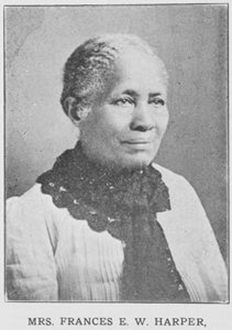
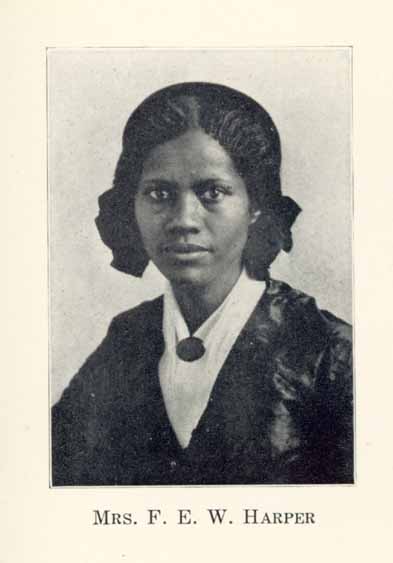
Frances Ellen Watkins Harper, 1825-1911, was a dear poet and lecturer of the Anti-Slavery Society connected to the Abolitionist movement, the Underground Railroad, the Women’s Christian Temperance Union, and the A. M. E. Church. Her first volume, Poems on Various Subjects, was published in 1854, and later followed by Moses: A Story of the Nile (1869), Poems (1871) and Sketches of Southern Life (1872). Here you have the poem “Eliza Harris”:

Like a fawn from the arrow, startled and wild,
A woman swept by us, bearing a child;
In her eye was the night of a settled despair,
And her brow was o’ershaded with anguish and care.

She was nearing the river – in reaching the brink,
She heeded no danger, she paused not to think;
For she is a mother – her child is a slave –
And she’ll give him his freedom, or find him a grave!

It was a vision to haunt us, that innocent face –
So pale in its aspect, so fair in its grace;
As the tramp of the horse and the bay of the hound,
With the fetters that gall, were trailing the ground!

She was nerv’d by despair, and strengthened by woe,
As she leap’d o’er the chasms that yawn’d from below;
Death howl’d in the tempest, and rav’d in the blast,
But she heard not the sound till the danger was past.

Oh! how shall I speak of my proud country’s shame?
Of the stains on her glory, how give them their name?
How say that her banner in mockery waves –
Her “star spangled banner” – o’er millions of slaves?

How say that the lawless may torture and chase
A woman whose crime is the hue of her face?
How the depths of the forest may echo around,
With the shrieks of despair, and the bay of the hound?

With her step on the ice, and her arm on her child,
The danger was fearful, the pathway was wild;
But, aided by Heaven, she gained a free shore,
Where the friends of humanity open’d their door.

So fragile and lovely, so fearfully pale,
Like a lily that bends to the breath of the gale,
Save the heave of her breast, and the sway of her hair,
You’d have thought her a statue of fear and despair.

In agony close to her bossom she press’d
The life of her heart, the child of her breast: –
Oh! love from its tenderness gathering might,
Had strengthen’d her soul for the dangers of flight.

But she’s free! – yes, free from the land where the slave
From the hand of oppression must rest in the grave;
Where bondage and torture, where scourges and chains
Have plac’d on our banner indelible stains.

The bloodhounds have miss’d the scent of her way;
The hunter is rifled and foil’d of his prey;
Fierce jargon and cursing, with clanking of chains,
Make sounds of strange discord on Liberty’s plains.

With the rapture of love and fullness of bliss,
She placed on his brow a mother’s fond kiss: –
O poverty, danger and death she can brave,
For the child of her love is no longer a slave!


Saturday, July 2, 2011

George Moses Horton, Myself

George Moses Horton, Myself


I feel myself in need

Of the inspiring strains of ancient lore

My heart to lift, my empty mind to feed,

And all the world explore.


I know that I am old

And never can recover what is past,

But for the future may some light unfold

And soar from ages blast.


I feel resolved to try,

My wish to prove, my calling to pursue,

Or mount up from the earth into the sky,

To show what Heaven can do.


My genius from a boy,

Has fluttered like a bird within my heart;

But could not thus confined her powers employ,

Impatient to depart.


She like a restless bird,

Would spread her wings, her power to be unfurl’d,

And let her songs be loudly heard,

And dart from world to world.

Thursday, June 30, 2011

Excerpt from "Comedy, American Style" by Jessie Fauset


Born in Philadelphia, and educated at Cornell, the University of Pennsylvania, and the Collège de France, Jessie Fauset (1882-1961) has taught French at Dunbar High School in Washington and in New York City. She has written verse as well as the novels There is Confusion (1924), Plum Bun (1929), The Chinaberry Tree (1932), and Comedy, American Style (1933). The excerpt below is from the last-named novel.


[Color Struck]

Mrs. Olivia Blanchard Cary glanced out of the window of her pleasant residence in West Philadelphia and saw her daughter Teresa, her books under her arm, strolling down the street, with two other little girls similarly laden. One of her companions, a very fair blonde with dark blue eyes and gay gilt hair, Mrs. Cary identified immediately as Phebe Grant. She was not so sure of the identity of the third youngster. Closer inspection revealed to her, however, the dark brown, the piquant features, the sparkling black eyes and the abundant, silky and intensely curly locks of Marise Davies. Mrs. Cary frowned. "As often as I've told Teresa to keep away from that Davies child!" she murmured angrily to herself.
She met them at the front door. The countenances of the three children were in striking contrast. Teresa's wore a look of apprehension, Phebe's of bland indifference, Marise's of acute expectancy.
"Good-afternoon, Teresa," Olivia said. "Good-afternoon children. I’m afraid it's not best for Teresa to have so much company today.
She gets excited and worn out and it’s hard afterwards for her to settle down to her lessons. I don't mind if one of you stays. Phebe, suppose you come in and play with her a while, and Marise, you can come back another time.”
"Tomorrow? " asked Marise, whose black eyes had never left Olivia’s face.
"Well, hardly tomorrow,” the woman replied, flushing a little. She really disliked this child. "Horrid, little pushing thing,” she inwardly apostrophized. But aloud she continued. "Hardly tomorrow, but some other day very soon, I am sure. Come on in, Phebe.”
"No, thank you, Mrs. Cary,” the child answered, pushing back the thick gilt hair which framed her face. “I was with Marise first, so I'll go on with her. We were just going to ask you to let Teresa come along with us. My mother expects me to be at Marise’s if I’m not home.” She spoke simply, no trace of the avenging angel about her.
The two children, hand in hand, backed off the bottom step on which they had been precariously teetering. Marise, ignoring Olivia completely, waved a slender hand toward Teresa. “Come on over whenever you can. My mother doesn't mind."
From the pavement both looked back once, more to wave a careless farewell to their schoolmate. “G’bye, Treesa!”
“Treesa!” Olivia echoed angrily. “Why can't they pronounce your name right?" She glanced sharply at her daughter's tear-stained face. "What's the matter, Teresa?"
The little girl wiped away a tear with the back of her hand.
"Mamma, why, can’t play with Marise? She’s such fun.”
Her mother sighed. I have " she thought, "the stupidest children and husband too in the world. Why can’t they see this thing the way I want it?” Not unkindly she took out her handkerchief and wiped the child's eyes.
"Now, Teresa, it isn't worth while going all over this matter again. I don't mind your having Phebe here; in fact I rather like Phebe. But I don’t like to have colored people in the house if we can possibly avoid it.”
"But, Mamma, Phebe is colored too."
“I know she is but nobody would ever guess it.”
“They don’t have to guess it; she tells it; she stood right up in class and said so.”
“What nonsense!” Olivia countered angrily. “What occasion would a girl, looking like her, have to talk about color?”
“She didn't say it of her own accord, Mamma. The teacher was having a review lesson on races one day and she asked Phebe what race she belonged to and Phebe said: `I belong to the black or Negro race.’”
"What did the teacher say?"
She just giggled at first and then she said: `Well, Phebe, we all know that isn't true. Don't try to be funny. Now tell us what race you do belong to, dear!' And Phebe said it all over again. She said: ‘I belong to the black or Negro race.’”
Olivia gasped. "Silly little thing! The idea of a girl as white as she saying that! What happened then?"
The teacher had her stay after school and Phebe showed her the picture of her mother. She wears it in a locket around her throat all the time. And her mother is colored. Not black, you know, Mamma, but real, real brown. Almost as brown as Marise, you know. You should have seen how surprised Miss Packer was!"
In spite of herself the mother was interested. "What did she say then?"
"She looked awful queer and asked Phebe if she looked like like her father and Phebe said she looked exactly like him . . . and that he didn't live here and that he was married to someone else…
And then Miss Packer turned kind of red and never said another word. ... How can Phebe's father not be married to her mother, Mamma?"
"Oh, I don't know . . . probably they couldn't get along so they seperated. Married people often do that. They call it getting a divorce." Hurriedly she changed the subject: "Did the children act any different to Phebe after that?"
Teresa considered this a moment. "Well, you see, Mamma, the chiIdren don't act any special kind of way to Phebe anyway, because Phebe don't care anything about them. The only child Phebe likes a whole lot in school is Marise."
"I thought she liked you."
“O she does, but not the same way she likes Marise. Marise is so smart you know. She can think up all the most wonderful things. Why she changed her name herself. It used to be Maria. And she said that was all wrong. She said she didn't look like a Maria person and she didn't feel like a Maria person…. Isn't that funny, Mamma? And she can sing and play and dance. You never saw anyone dance like her. And she can think up such smart things to say. I don't see why you don't like her, Mamma."
"I don't dislike her," her mother retorted in exasperation. "You don't understand these things, yet, Teresa. But you will when you're older . . . and you'll be grateful to me. I just don't want you to have Marise and people like that around because I don't want you to grow up among folks who live the life that most colored people have to live ... narrow and stultified and stupid. Always pushed in the background . . . out of everything. Looked down upon and despised! ...
"Teresa, how many times must I tell you these things? You and your father and Christopher almost drive me crazy! You're so will-fully perverse about it all! Here we could all be as white as the whitest people in Philadelphia. When we moved in this neighborhood not a soul here but thought we were white! And your father is never happy unless he has some typical Negro hanging about. I believe he does it to tease me. And now here you are, all wrapped up in this Davies child!"
"But, Mamma, what difference does it make? And anyway, there's Oliver!"
There indeed was Oliver.
Olivia, with very little love for her husband, Dr. Cary, with no enthusiasm, as such, for the institution of matrimony and with absolutely no urge for the maternal life, had none the less gone cheerfully and willingly into both marriage and motherhood because she believed that through her children she might obtain her heart’s desire. She could, she was sure, imbue her offspring with precept and example to such an extent that it would never enter their minds to acknowledge the strain of black blood which in considerable dilution would flow through their veins.
She could be certain of their color. Her twin sister and brother, only two years older than her own children, had proven that. It was worth every one, she felt, of her labor pains not to hold in her arms little Teresa, her first-born, – but to gaze on that tiny, unremarkable face and note the white skin, the thick, "good" dark hair which covered the frail skull; to note that the tell-tale half-moons of which she had so often read were conspicuously absent. It seemed to her that the tenuous bonds holding her ever so slightly to her group, and its station in America, were perceptibly weakened. Every time she appeared in public with the little girl she was presenting the incontestable proof of her white womanhood…
And when Christopher, the second child was born, she was not the least fraction worried over the closely curling tendency of his slightly reddish hair. She had known Jews with hair much kinkier. Time and care would attend to all that. And meanwhile his skin was actually fairer than that of his little sister, his features finer and better chiselled. He had, she felt, a look of "race," by which she meant of course the only race which God, or Nature, for hidden, inscrutable purposes, meant should rule.
But she had not reckoned with the children's father. Christopher had finally established in his the fact of his chaste wife’s frigidity. When he fully realized that her much-prized "aloofness," instead of being the insigne of a wealth of feeling, was merely the result of an absolute vacuum of passion, young as he was, he resolved not to kick against the pricks.
He had, he told himself, been sold, as many a man before him had; tricked as completely by his deliberate submission to ideals, entirely false to his nature and his desires, as a young girl might be by her first surrender to a passion which her heart tells her is natural, though her mind and breeding might warn her of its inexpediency. The first of that hardening process which was so to change him did have its inception during this period, but as he had some humor and a sense of justice beyond his years he refused to let the iron enter his soul.
Moreover, Olivia, though not a "comfortable" house-keeper, was a clean and considerate one. She really never interfered with his “papers”; she never, even from the beginning, troubled him with the delinquencies of the help. And in those days, and for some years to come, she never exceeded the budget which he allowed her. Also her obvious willingness, even eagerness, to have children pleased and touched him. In his total ignorance of the plans which nestled eternally in the back of her sleek, dark head, he reasoned that a woman so fond of children must by a very natural extension develop eventually a certain tenderness for their father. So he hoped for many things and forgave her much with a somewhat rueful and yet amused indulgence.
Until he found in her the unalterable determination to carry himself and his children definitely across the narrow border-line of race! This too he at first regarded with some indulgence, but her unimaginative persistence finally irritated him. He was too busy to undertake completely the education of the children – he was responsible for their maintenance. But he could let them see his manifest respect and liking for many men who had been his boyhood friends and who bore the badge of their mixed blood plainly upon them.
He told the children every story he knew about the heroes of the race. Olivia would have preferred them to be ignorant of their own remote connection with slavery. But he did strive to make them realize the contrast between their present status and that of their black forebears. He emphasized the racial progress, stressing the brief span of years in which it had been accomplished.
And the children, straightforward, serious little things without an ounce of perversity in their make-up, were entranced, thrilled. Perhaps because they never met with any open expression of prejudice they seemed to find their greatest interest and amusement among the children of their father's friends who most definitely showed color. For a brief while Christopher's hero was Crispus Attucks; Teresa's brave Sojourner Truth. But later, through lack of nourishment, their interest in this phase of history died.

........................................


When the children were four and a half, and six, respectively, Olivia found she was going to have another baby. She was really very happy about it with a naïvete and a frankness which, Dr. Cary, as before, found inexpressibly moving and charming. Within herself she was making plans. This child should be her very own. She would make her husband believe that she needed a change, she would take the child away and live with him apart for two, three, perhaps five years. In appearance, in rearing, in beliefs he should be completely, unrelievedly a member of the dominant race. She was a much wiser woman than she had been six years ago. The prospect made her gay and charming, almost girlish; far younger too than her twenty-eight years, younger indeed it seemed to her husband than she had ever been in those remote, so precious years of training.
"This one will be a boy," she told big Christopher gaily. “He’ll be the handsomest and most attractive of us all. And I'll name him after myself. An Oliver for your Christopher."
Her prophecy was, except in one respect, absolutely true. She had boasted of the ease with which her children had entered the world. But this one she was confident would outstrip them all.
"I'm sure I'll be up very soon, Chris," she told her husband. She adopted one of her rare moods of coquetry. "And when I do get up, you ought to reward a dutiful wife. How would you like to send her and your baby son on a little trip to England?" Her eyes were bright with secrecy. He would, he assured her, do anything, give her anything she wanted within his range.
But the unforseen happened. The baby arrived in due course. "Hale and hearty," said his beaming father. There never was a baby haler and heartier. But Olivia did not fare so well. She had one sinking spell after another. For the first time she was unable to nurse her child. She was to meet with no excitement or shock and as the baby was going very well it was best for her not to be concerned with him for a while. She was to concentrate on recovering her strength. So that it was a full month before the baby was set before her, crowing and laughing and persistently and futilely striking his Iittle hands together.
Olivia sat up, arms outstretched to receive him. Her baby! Her eyes stretched wide to behold every fraction of his tiny person. But the expectant smile faded as completely as though an unseen hand had wiped it off. She turned to her husband sharply:
“That's not my baby!"
But it was her baby. It was a boy, handsomer and more attractive than the other children. He was named Oliver... They had been calling him that for a month, her delighted children assured her… his hair was black and soft and curly... and he had the exact bronze gold complexion of Lee Blanchard!
She had reckoned without her own father!
..........................................

For the first time since she had known the futile anger of her early childhood she slipped into a black, though silent, rage. Her early anger had been directed against her father. This later ebullition included both her husband and her helpless little boy. She had no special beliefs about prenatal influences but she did observe to herself in the dark and tortuous recesses of her mind that if big Christopher had not been so decidedly a Negrophile, the appearance of their child would have been otherwise.
The little fellow was of a remarkable beauty. Through one pretext and another Olivia contrived not to be seen on the street with him. But the two older children and his father would proudly conduct him anywhere. And wherever he went he attracted attention… infinitely more so than his brother and sister had ever earned. Added to this was an undeniable charm of manner and of mind. He possessed not only a winning smile and a genuine sweetness of attitude and conduct but he was unquestionably of remarkable mental endowment... If he had possessed an ounce of self-confidence, or even of the ordinary childish conceit which so often marks the "bright boy," he might easily have become unbearable. But even from babyhood little Oliver sensed in himself one lack which early automatically destroyed any root of undue self-esteem. He knew he did not have his mother's love…. Worse than that through some strange childish, unfailing perception he was sure of her active but hidden dislike for him.
When he was home Olivia fed him with the same food, watched over and satisfied his physical welfare as completely and meticulously as she watched over that of the other members of her household. But she never sought his company, she never took him riding or walking as she did the others, never bestowed on him more than the perfunctory kiss of salutation… When people, struck with his appearance and healthy grace, praised him before his face as so often they did, he would turn sometimes toward her thinking dimly that now she must be proud of this fine little boy who was her son. But he never surprised on her countenance a single flash of delight or pride or love.
It saddened his childish days... As soon as he became old enough to be from under her surveillance Olivia saw to it that he spent most of his time with her own mother in Boston or with her husband's mother in South Philadelphia. In both of these homes he met with the intense affection and generous esteem which his finely keyed little nature so craved. Gradually he became able to adjust himself to the inexplicable phenomenon of a mother who not only did not love with especial signal fondness, but who did not love at all, her youngest son. By sheer strength of will he forced himself to steel his brave and loyal heart against this defection and to crush down his pain. His father had some sense of what was happening and in his heart he bore his wife a deep and unyielding dislike.

Related Posts Plugin for WordPress, Blogger...